Guide for artists & studios
How to build a tattoo portfolio
A good tattoo portfolio shows a few, but your best, pieces in your style, ideally healed as well, and makes it easy to book you. It needs consistent, honest pictures and your clients' permission for every image.
Here you will learn what a portfolio should show, how to choose your pieces and how to build it step by step.
By Inkmirra · Updated: 1 November 2026 · 3 min read
What a portfolio should show
Your style
Anyone opening your portfolio should quickly see what you stand for: fineline, traditional, realism or something all your own.
Healed work
Freshly done, almost every tattoo looks bold. Healed pictures show how your work looks in the long run.
Large pieces in full
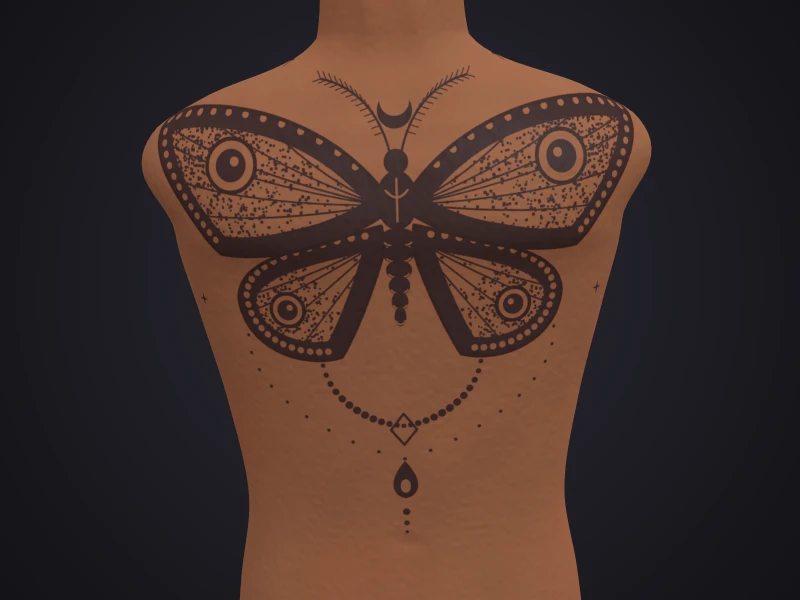
Sleeves and back pieces only work as a whole. Crops do not show how the design flows around the body.
Placement
Show where the tattoo sits. That helps people imagine how it would look on their own body.
How to reach you
City, studio, Instagram and a booking link belong in a visible place.
Choosing: quality over quantity
A few strong pieces beat many average ones. Sort by style, remove work that no longer fits you and keep the portfolio up to date.
Above all, show what you want to tattoo more often. A portfolio tends to attract the requests it shows.
Good pictures
Same light, a straight angle, no filters: consistent pictures look professional and honest. Typical problems are glare on the skin and distortion on curved body parts.
Guide: photograph a tattoo without glare →Client consent
A tattoo photo shows a body. So ask for permission before publishing, keep a record of it and respect it if someone withdraws it. It is best to leave faces and other identifying features out of the picture.
Inkmirra has this built in: a piece only goes into your portfolio once its owner has consented. If consent is withdrawn, the piece disappears. Your clients' names and e-mail addresses are never shown publicly.
This guide is not legal advice.
Where your portfolio should be seen
Instagram and other networks
Good for reach. But pictures are often cropped and quickly get lost in the feed.
Your own website
Your place, your order. A portfolio widget can be added to an existing site.
Directories
Profiles in artist directories help people who search by style and city.
Step by step with Inkmirra
Create your profile
Profile name, styles, city, Instagram and booking links.
Scan your work
Ideally healed at the check-up, fresh works too. About 30 seconds of video is enough.
Get consent
Your client takes over the tattoo and releases it for your portfolio.
Show it
On your profile page with gallery and 3D photo book, in the artist directory and via a widget on your website.
Questions about tattoo portfolios
How many pieces belong in a tattoo portfolio?
There is no fixed number. A few strong pieces in your style work better than many average ones. Keep the selection up to date.
Should I show fresh or healed tattoos?
Ideally both. Healed work shows how your tattoos look in the long run; you can add fresh pictures.
Do I need my clients' permission?
Ask for permission before publishing and keep a record of it. At Inkmirra, a piece only goes into your portfolio with consent, and consent can be withdrawn. This guide is not legal advice.
Do I need my own website?
Not necessarily, but it belongs to you. With Inkmirra you get a profile page and can also embed your 3D portfolio in an existing website via a widget.
How much does a 3D portfolio at Inkmirra cost?
You can try it free with up to 3 pieces in your portfolio. Plans for artists and studios are on the pricing page.